"The future belongs to those who believe in the beauty of their dreams." — Eleanor Roosevelt
When I was re-elected as Education Officer at the University of Birmingham Guild of Students in March 2026, I noted in my speech that I was the only care leaver ever to be elected to a second sabbatical term at the institution. I dedicated that win to care-experienced students across the country who rarely see themselves reflected in student leadership or university governance, to show that if you are given the space to lead, you really can go the distance and achieve great things.
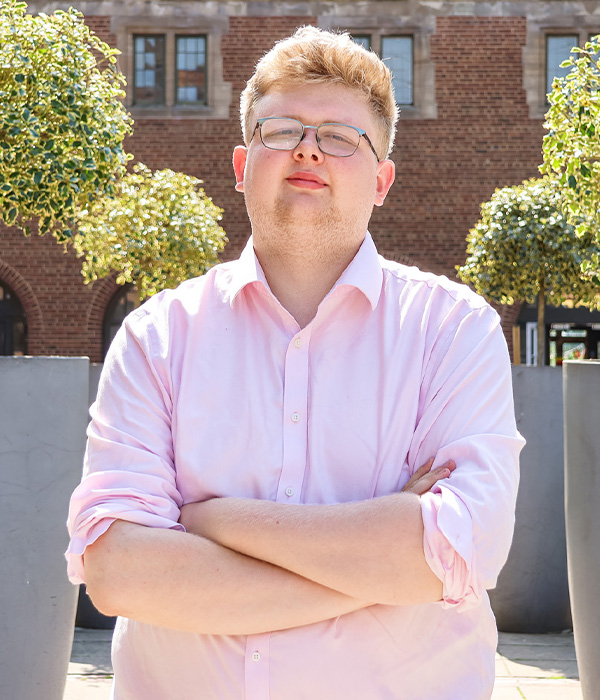
In this National Care Leavers’ Month, the theme is "Leading the Way." Across higher education, there is rightly a huge focus on supporting care-experienced students. At the University of Birmingham, I have seen first-hand how powerful it is when an institution goes a step further—not just offering support, but actively welcoming lived experience into senior decision-making spaces to help shape policy from the inside.
Over the past year, attending university committees and working directly with senior leaders has shown me what genuine partnership looks like. By bringing the perspective of someone who has navigated university without a family safety net allows us to spot subtle gaps in policy early and work together to fix them.
Making financial support work for how students actually live
One of the best examples of this collaborative approach was our work to enhance Birmingham’s flagship financial support package for care leavers, the Enhanced Chamberlain Award.
By reviewing how students used the award, I noticed a gap between the value of the accommodation fee waiver and the cash bursary option. While a strong accommodation waiver is valuable in the first year, by secondand third year most students move into private rented housing with their friends where so much of university social life happens. Under the existing structure, care leavers choosing independent living were receiving less overall financial value than those staying in halls.
When I brought this lived reality directly to the University Provost, Professor Nick Vaughan-Williams, the response was constructive and immediate. By explaining why that difference mattered on the ground and how crucial it was for support to keep pace with rising living costs we worked alongside Student Services to secure additional funding to uplift the cash bursary option. For a student without family to fall back on, that uplift isn't just extra spending money; it is the difference between participating fully in university life, rather than constantly worrying about making ends meet.
Partnering with alumni to tackle hidden course costs
That same spirit of practical problem-solving also shaped a brand-new philanthropic initiative launching for the 2026/27 academic year.
Working closely with the university’s Development and Alumni Relations team, I had the opportunity to help demonstrate to alumni donors the real, everyday impact their generosity can have. When the sector calculates the cost of university, the focus is usually on tuition and rent. Far less attention is paid to the unexpected, out-of-pocket course costs, field trips, specialist equipment, software, or travel expenses that arise mid-semester.
For care leavers and estranged students without parents to call when an unexpected bill lands, even a modest expense can become an unfair hurdle. Through those conversations, we turned an idea into the Care Leaver and Estranged Student Independence Fund giving students targeted, practical support so their circumstances never limit their academic ambitions.
Taking the conversation national: The postgraduate cliff-edge
While local institutional partnerships show what is possible on individual campuses, the wider sector still has shared challenges to solve, particularly around what happens after graduation. Earlier this year, I wrote on these pages about the urgent need to support care leavers progressing into postgraduate study. Widening undergraduate participation is rightly one of higher education’s proudest achievements over the past two decades. Yet the door to postgraduate study remains far harder to open. As a master’s degree increasingly becomes the baseline for social mobility and entry into competitive professions, care leavers still face significant structural barriers:
- The data gap: Sector-wide tracking of care-experienced students virtually disappears once they complete their first degree.
- The funding shortfall: Postgraduate loans rarely cover both tuition and living costs, leaving care leavers without family backing to shoulder the full financial risk alone.
- The hidden infrastructure: From securing housing guarantors to accessing professional networks, the informal safety nets that help other graduates transition into postgraduate study are often missing.
It has been hugely encouraging to see the Russell Group adopt proposals around better data reporting, and to see institutions like the University of Birmingham actively exploring ways to strengthen postgraduate support. Now, the wider sector and the government, in its role as corporate parent must match that momentum so our commitment to care-experienced young people continues well beyond undergraduate graduation day.
Looking ahead
"It always seems impossible until it's done." — Nelson Mandela
My experience at Birmingham has reinforced a simple truth: lived experience is not just something for universities to accommodate it is strategic insight that helps institutions serve their students better. To every care-experienced student reading this: your lived experience is a strength, your voice matters, and you belong in these spaces just as much as anyone else.
Being a care leaver should never mean having to lower your ambitions or make yourself smaller. Our experiences should remind us why these spaces need our voices, not give us a reason to feel that we don't belong in them.
Leading the way isn't about holding a title. It is about universities opening the doors of power, listening to the students in the room, and working together to ensure the next generation of care leavers doesn't just make it through the university gates they help shape the future of higher education.